What are the typical application scenarios for Backward Centrifugal Fans?
1. Typical Application Scenarios
Backward centrifugal fans are widely used in the following fields due to their high efficiency, stable pressure characteristics, and low noise:
2. Air Conditioning and Ventilation Systems
Providing stable air supply and exchange in VAV (Variable Air Volume) air conditioning terminals in large commercial buildings and office buildings.
3. Industrial Dust Collection and Smoke Exhaust
Suitable for forced extraction of dust and smoke, such as in industrial dust collection and smoke exhaust systems, maintaining high air volume under medium pressure conditions.
4. High-Pressure Air Supply and Cooling
Performing excellently in applications requiring high static pressure, such as combustion air, product cooling, and fluidized bed boiler air supply.
5. Kitchens and Clean Environments
Due to their low noise and compact structure, they are often used in kitchen exhaust, cleanroom ventilation, and other places with strict requirements for noise and space.
What are the advantages of Backward Centrifugal Fans compared to forward-curved or axial fans?
| Key Indicator |
Backward Centrifugal Fan |
Forward‑Curved Centrifugal Fan |
Axial Fan |
| Efficiency |
Highest efficiency, lowest energy consumption |
Lowest efficiency, highest energy consumption |
Moderate efficiency; suitable for high‑flow, low‑pressure applications |
| Noise |
Low operating noise, better comfort |
Relatively higher noise |
Average noise, increases with high flow rates |
| Load Stability |
Resistant to overload, wide applicable range |
Prone to overload, narrow applicable range |
Sensitive to pressure drop; best for low‑pressure systems |
| Structure & Maintenance |
Compact structure, can use high‑speed bearings, lower maintenance cost |
More complex structure, speed limited |
Simplest structure but requires strict duct layout |
Overall Advantages: Backward-curved centrifugal fans achieve higher static pressure with lower power consumption under the same airflow and total pressure conditions. They also operate smoothly and with low noise, making them suitable for modern buildings and industrial systems with strict requirements for energy consumption and comfort.
How to perform routine maintenance on Backward Centrifugal Fans?
1. Airflow and Static Pressure Variation Requirements: If the system requires airflow adjustment under different operating conditions (such as seasonal loads, equipment start-up and shutdown), it is
recommended to use VFD for continuous speed control.
2. Energy Consumption and Operating Costs: Variable frequency speed control reduces motor power proportionally to the cube of the airflow, significantly saving energy, especially in HVAC systems
operating for extended periods.
Motor Compatibility: The 133mm series provides a 0-10VDC/PWM control interface, directly compatible with VFDs or speed controllers, requiring no additional modifications.
3. Noise and Vibration Control: Lower noise levels at low speeds improve the comfort of the environment, making it suitable for noise-sensitive precision instruments.
4. System Complexity and Cost If it is only used under a single fixed operating condition and the air volume requirement is constant, VFD can be omitted, reducing system cost.
Frequently Asked Questions (FAQ)
Q1: What are the main technical parameters of the Backward Centrifugal Fans from Ningbo Haoyue Fan Manufacturing Co., Ltd.?
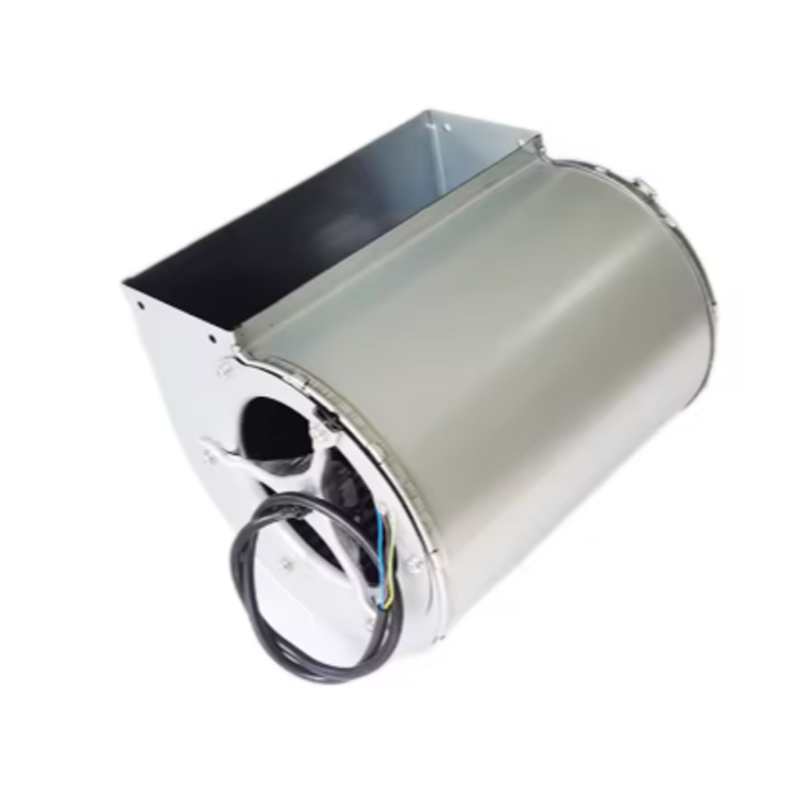
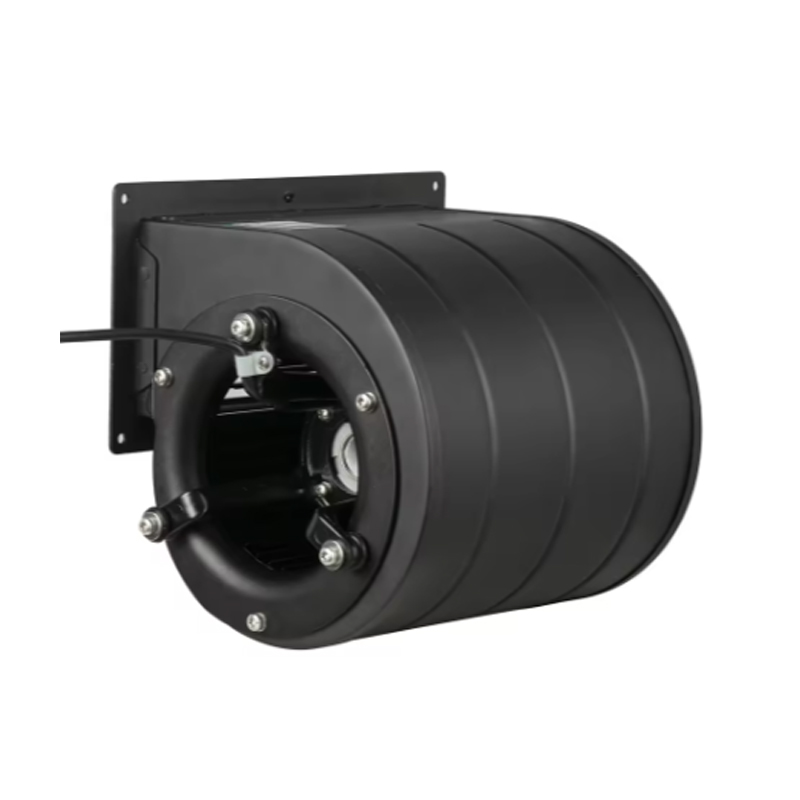
A: The Backward Centrifugal Fans offered by the company, such as B2E190-063A-AA00 (impeller diameter 190mm, maximum air volume 540m³/h) and B4D450-208A-AT00 (impeller diameter 450mm, maximum air volume 5600m³/h), have an IP44 protection rating, CE/CCC certification, a power range from 0.7kW to 7.2kW, a noise level of approximately 80dB, and are suitable for environments ranging from -25°C to +60°C.
Q2: What customization options are available for the Backward Centrifugal Fans from Ningbo Haoyue Fan Manufacturing Co., Ltd.? A: Our company can provide customized solutions based on customer needs, including dimensions, materials, motor type (single-phase direct drive AC or EC), speed, control method (variable frequency speed regulation), and packaging method (foam box, wooden box), to meet the space, noise, and energy efficiency requirements of different projects.
Q3: What are the key points for the installation and maintenance of Backward Centrifugal Fans?
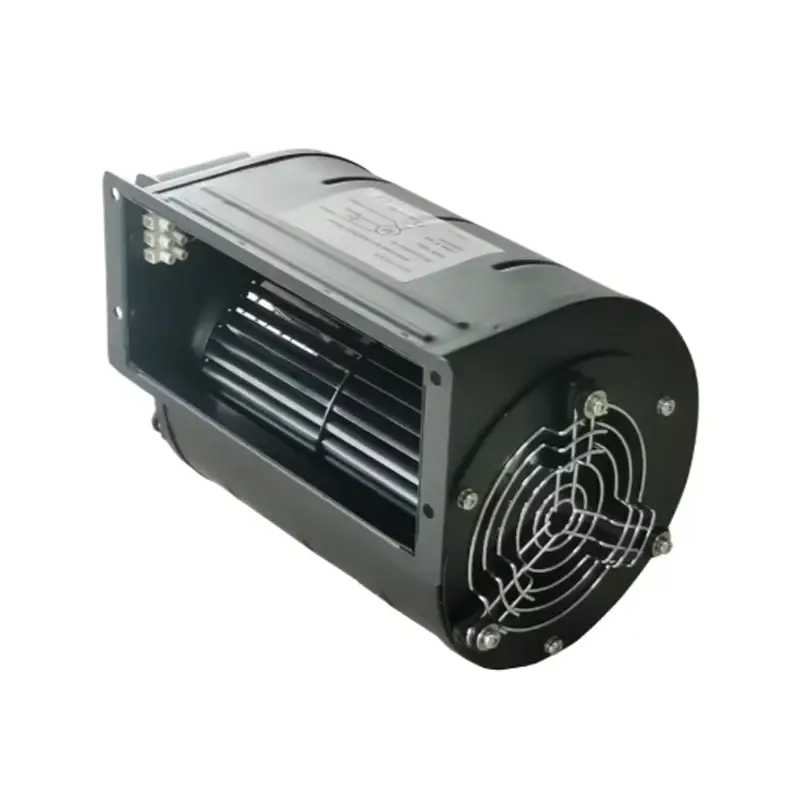
A: During installation, ensure that the inlet and outlet are aligned with the fan axis to avoid excessive bending that could lead to pressure loss; maintain a uniform gap between the impeller and the casing to prevent vibration; regularly check bearing lubrication, impeller balance, and the integrity of the protective mesh; cleaning dust can extend service life and maintain low noise.
Q4: How is the energy efficiency of Backward Centrifugal Fans evaluated?
A: Common indicators include air volume (m³/h), static pressure (Pa), power (W), and efficiency (%). Backward-curved fans typically have 10%-20% lower power consumption than forward-curved fans at the same air volume and static pressure, thus offering better energy efficiency. Actual projects can verify this through CFD simulation or on-site testing.



 فارسی
فارسی
